

Table of Contents
- What Makes Bamboo Fabric a Contender for Everyday Wear
- Bamboo Viscose vs Cotton Durability: What Holds Up Over Time
- How to Care for Bamboo Clothing So It Lasts
- Frequently Asked Questions
Last Updated: September 27, 2026
What Makes Bamboo Fabric a Contender for Everyday Wear
Bamboo fabric is a textile made from the fibers of the bamboo plant, and it has become a genuine contender for everyday wear because of how it feels against the skin. The global bamboo clothing market was valued at USD 2.5 billion in 2023 and is projected to reach USD 5.2 billion by 2030, growing at a CAGR of 10.7% (Strategic Market Research bamboo clothing market report).
Here at Kimberly's Dream, we talk to women every week who want loungewear that feels soft enough for a lazy Sunday but polished enough for a video call. Bamboo fabric is moisture-wicking, breathable, and naturally smooth, which is why it keeps showing up in base layers and everyday shirts (MFG Merch guide to bamboo fabric types).
But whether bamboo fabric is worth it depends on which bamboo you're buying.
The short answer: yes, with conditions. Bamboo fabric earns its place for daily comfort, but struggles with durability in heavy rotation, and its sustainability story is complicated.
The Benefits That Actually Matter
- Softness and drape: Bamboo fibers are exceptionally smooth, giving garments a fluid, elegant fall that cotton rarely matches.
- Moisture-wicking: Bamboo pulls sweat away from skin, which keeps you comfortable through long work-from-home days.
- Breathability and thermoregulation: The fabric helps regulate temperature, so it works in summer and layered in winter.
- Hypoallergenic tendencies: Its smooth surface makes bamboo a common pick for sensitive skin.
- Antibacterial properties: Research published via ScienceDirect on bamboo fabric antibacterial performance found bamboo fabric retains significant antibacterial properties even after 50 wash cycles.
Where Bamboo Falls Short
Pure bamboo fiber is rarely the best choice for high-performance or heavy-use clothing (MFG Merch on bamboo fabric limitations). The fibers are so smooth that they can pill, snag, and lose shape under constant friction, which is why the industry has shifted toward blending bamboo with other fibers for durability.
There's also the environmental question: much of what's sold as bamboo fabric is actually rayon, produced through a chemical process that undercuts the plant's eco-friendly reputation.
Bamboo Viscose vs Cotton Durability: What Holds Up Over Time
Bamboo viscose is the most common form of bamboo fabric on the market. It holds up in everyday rotation but loses to cotton on tensile strength and abrasion resistance, while winning on softness, drape, and moisture management.
| Factor | Bamboo Viscose | Cotton |
|---|---|---|
| Softness | Exceptional | Good |
| Moisture-wicking | Strong | Moderate |
| Tensile strength | Moderate | High |
| Pilling risk | Higher | Lower |
| Shrinkage | Moderate | Low with pre-shrinking |
| Breathability | High | High |
| Best for | Loungewear, base layers | Heavy daily rotation |
A comparative study in the International Journal of Engineering Research & Technology examined bamboo/cotton blends against 100% cotton and found measurable differences in physical properties, which is exactly why blends exist. Blending gives you bamboo's comfort with cotton's backbone.
Energy use is another differentiator. Bamboo fabric production consumes about 30% less energy than conventional cotton (Climate Action & Sustainability report). That's a real advantage, though it doesn't cancel out the chemical processing concerns tied to viscose.
For everyday wear, bamboo viscose is worth it if you rotate garments and treat them gently; if you need one shirt to survive 200 wears and constant washing, cotton is safer.
How to Care for Bamboo Clothing So It Lasts
Caring for bamboo clothing comes down to three rules: wash cold, skip the dryer, and never wring it out. Follow those and bamboo garments hold their softness and shape far longer than most people expect.
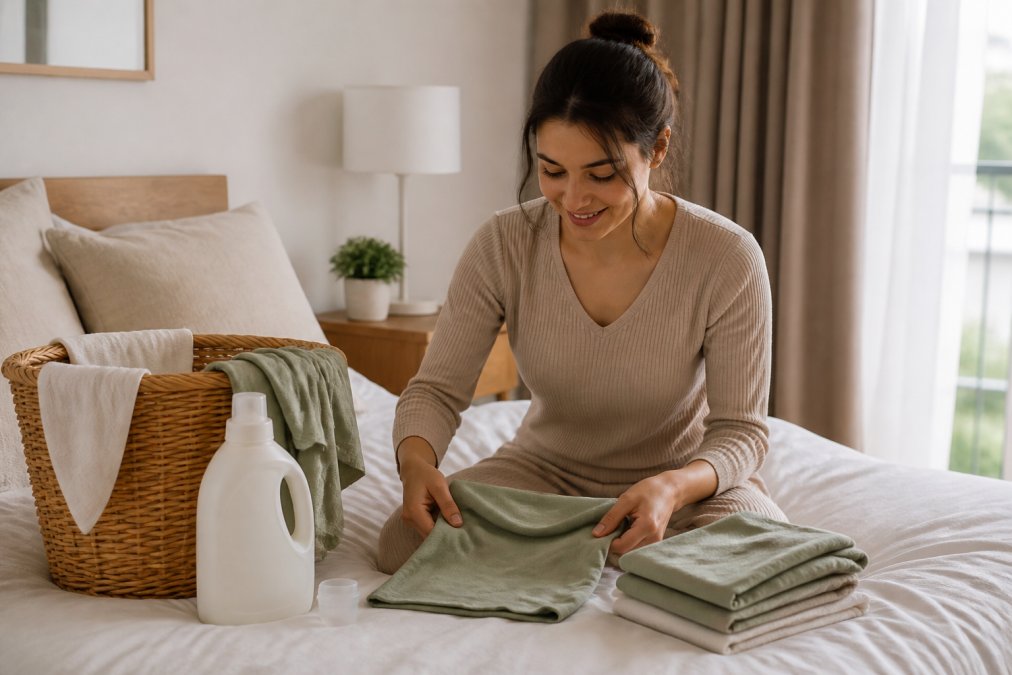
The full routine:
- Turn garments inside out before washing to reduce friction.
- Use cold water on a gentle cycle with mild detergent; no bleach or fabric softener.
- Skip the dryer. Lay flat or hang to dry away from direct heat.
- Store folded, not hung, for knits that stretch.
The Sustainability Question, Answered Honestly
Is bamboo fabric sustainable? It can be, but the label alone doesn't guarantee it. The majority of products marketed as bamboo fabric are processed into rayon or viscose, which relies on chemical solvents. Bamboo lyocell, a more sustainable and safer manufacturing alternative, currently represents only a small fraction of the market (FiberCheck on bamboo fabric safety).
Frequently Asked Questions
What is the downside of bamboo fabric?
The main downside is that most bamboo fabric is viscose, made with carbon disulfide, a chemical solvent that can be harmful if not handled properly. Pure bamboo fibers are also very smooth, so they may pill or lose shape with heavy use. Some critics call this greenwashing because the chemical process reduces the plant's natural eco-friendly benefits.
Is bamboo fabric really just rayon?
Often, yes. Much of what is sold as bamboo fabric is actually bamboo rayon or viscose, a regenerated cellulose fiber made by dissolving bamboo pulp in chemicals. Bamboo lyocell uses a closed-loop process that captures and reuses solvents, but it represents only a small share of the market. Always check the label for the exact fiber type.
How does bamboo fabric hold up after multiple washes?
Bamboo fabric retains significant antibacterial properties even after 50 wash cycles. However, pure bamboo can shrink or pill if washed in hot water or dried on high heat. Use cold water and lay flat to dry to keep the fabric soft and shape-retaining.
0 comments