

Table of Contents
- What a Capsule Wardrobe Actually Is (and Why 2026 Is the Right Time to Start)
- Capsule Wardrobe for Beginners: Define Your Style and Color Palette First
- How to Declutter Your Closet Before You Build
- Your Capsule Wardrobe Checklist: The Core Pieces to Own
- The 3-3-3 Wardrobe Challenge: A Simple Way to Test Your Capsule
- Seasonal Transitions, Garment Care, and Digital Inventory Management
- Conclusion
What a Capsule Wardrobe Actually Is (and Why 2026 Is the Right Time to Start)
A capsule wardrobe is a curated collection of timeless, versatile pieces that work together seamlessly, replacing closet chaos with fewer, intentional garments you actually wear. The concept is simple: fewer pieces, more outfit combinations, less decision fatigue every morning.
Here at Kimberly's Dream, we've watched this approach shift from niche minimalism into a genuine lifestyle strategy. 2026 is a particularly good moment to start. Sustainable fashion continues to gain momentum, cost-per-wear thinking is replacing impulse buying, and hybrid work has blurred the line between professional and casual dressing in ways that make a versatile capsule system more practical than ever.
The biggest misconception is that a capsule wardrobe means giving up personality or style. It doesn't. A well-built capsule is deeply personal, reflecting how you actually live, work, and move through the world. According to The True Cost documentary and sustainable fashion research from Fashion Revolution, the average person wears only about 20% of the clothes they own regularly. That's the problem a capsule wardrobe solves.
Capsule Wardrobe for Beginners: Define Your Style and Color Palette First
Before you buy a single piece, understand what your aesthetic actually is and which colors work across your existing life. Skip this step and you'll build a capsule that looks great on paper but feels wrong when you put it on.
Finding Your Signature Color Palette
A strong capsule is built on neutral tones as its foundation: white, cream, navy, camel, grey, and black. These base pieces layer easily, pair with everything, and resist trend cycles.
From there, choose one or two accent colors that genuinely reflect your personality, colors you reach for naturally, not seasonal trends you've seen on social media. Pull out your five favorite outfits right now and look at what they have in common. Most people discover their palette already exists in their wardrobe.
Matching Your Capsule Aesthetic to Your Actual Life
The capsule aesthetic you build should reflect your real weekly schedule, not your aspirational one. A common mistake is building around an imagined lifestyle when you work from home or spend most time on errands.
Map out a typical week. Count how many days you need professional-adjacent clothing versus casual comfort. Your capsule proportions should mirror that breakdown. If you spend four days working from home and one day in meetings, your capsule should reflect that ratio.
How to Declutter Your Closet Before You Build
Decluttering before you build is non-negotiable. Trying to build a capsule wardrobe on top of a disorganized closet is like renovating a house without clearing old furniture first.
The Wardrobe Audit: What Stays and What Goes
Pull everything out of your closet and lay it on your bed. Evaluate each piece against these questions:
- Have I worn this in the last 12 months?
- Does it fit my body right now?
- Does it align with my color palette?
- Is it in good condition?
- Does it pair with at least three other pieces I'm keeping?
Anything that fails two or more questions goes into donate, sell, or discard piles. Be honest. Sentimental attachment to pieces you never wear undermines a functional capsule system.
According to EPA guidance on textile waste and sustainable clothing disposal, clothing and textiles account for a significant portion of landfill waste annually. Donating or reselling what you remove is the more responsible path.
Your Capsule Wardrobe Checklist: The Core Pieces to Own
A well-built capsule collection typically contains between 25 and 37 pieces, including shoes and outerwear. Quality and versatility matter more than exact numbers.
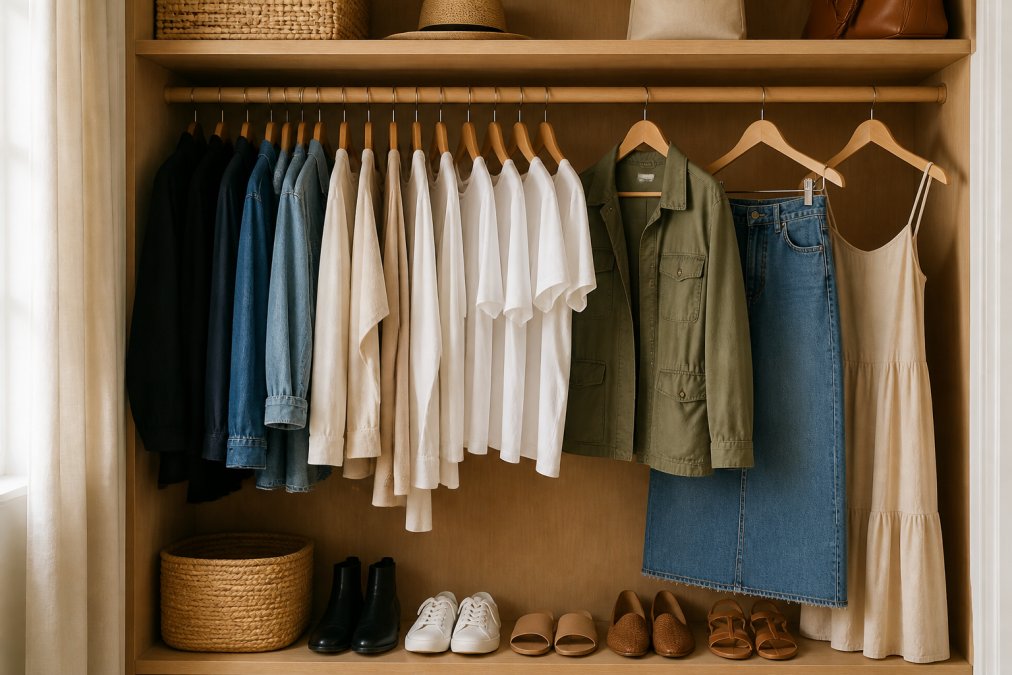
Here's a practical capsule wardrobe checklist organized by category:
| Category | Core Pieces | Best For |
|---|---|---|
| Tops | 2-3 white/neutral tees, 1 button-down, 1 fitted knit | Layering, everyday wear |
| Bottoms | 1 dark denim, 1 tailored trouser, 1 midi skirt | Versatile outfit building |
| Dresses | 1 A-line or wrap dress | Work, casual, events |
| Outerwear | 1 utility jacket, 1 coat | Seasonal transitions |
| Shoes | 1 sneaker, 1 flat, 1 heel or boot | Daily coverage |
| Accessories | 2-3 bags, minimal jewelry | Outfit elevation |
A great starting point for tops is the Rockstar Streetwear White Cotton Tee from Kimberly's Dream, a 100% cotton essential at $30 that pairs with virtually every bottom. For budget-friendly layering, the Essential Tee at $14 is designed for versatility with improved coverage and a fit that works tucked, untucked, or layered.


For skirts, the Jennifer A-Line Long Denim Skirt at $58 brings a premium navy wash that reads casual or polished. Add the Women's A Line Dress at $49 for a single dress that transitions from video calls to dinner out. Outerwear comes from the Lucky Brand Utility Jacket at $33.99, a layering piece that adds structure to any combination.

Capsule Wardrobe for Professional and Work-From-Home Settings
The professional capsule solves a specific problem: looking polished on a Zoom call at 10am and comfortable enough to work through a full day.
For work-from-home, prioritize tops that photograph well from the shoulders up. A fitted knit, crisp white tee, or button-down in neutral tones all work. Pair them with tailored trousers or a midi skirt for calls, swap to comfortable bottoms when the camera is off.
For corporate or in-office environments, your capsule leans slightly more formal. A well-cut blazer, two pairs of tailored trousers, a sheath or A-line dress, and polished flats carry you through most professional weeks without repetition.
Adapting Core Pieces for Your Body Type
Fit is the single biggest factor in whether a capsule actually works for you. Choose silhouettes that create the proportions you want, then build your capsule around those shapes.
- Pear-shaped: A-line skirts and wide-leg trousers balance the hip line. Fitted tops draw attention upward.
- Apple-shaped: Empire waist dresses and wrap styles create definition. Avoid boxy cuts.
- Petite frames: Monochromatic outfits and high-waisted bottoms create the illusion of length. Cropped jackets work better than long coats.
- Tall frames: Midi and maxi lengths are proportional. Bold prints and color blocking work well.
A capsule built around your actual silhouette requires fewer pieces to create more outfit combinations than one built around trend-driven shapes that don't suit your body.
The 3-3-3 Wardrobe Challenge: A Simple Way to Test Your Capsule
The 3-3-3 wardrobe challenge is a practical method for testing whether your capsule actually works. Choose 3 tops, 3 bottoms, and 3 accessories, then dress exclusively from those 9 pieces for 30 days.
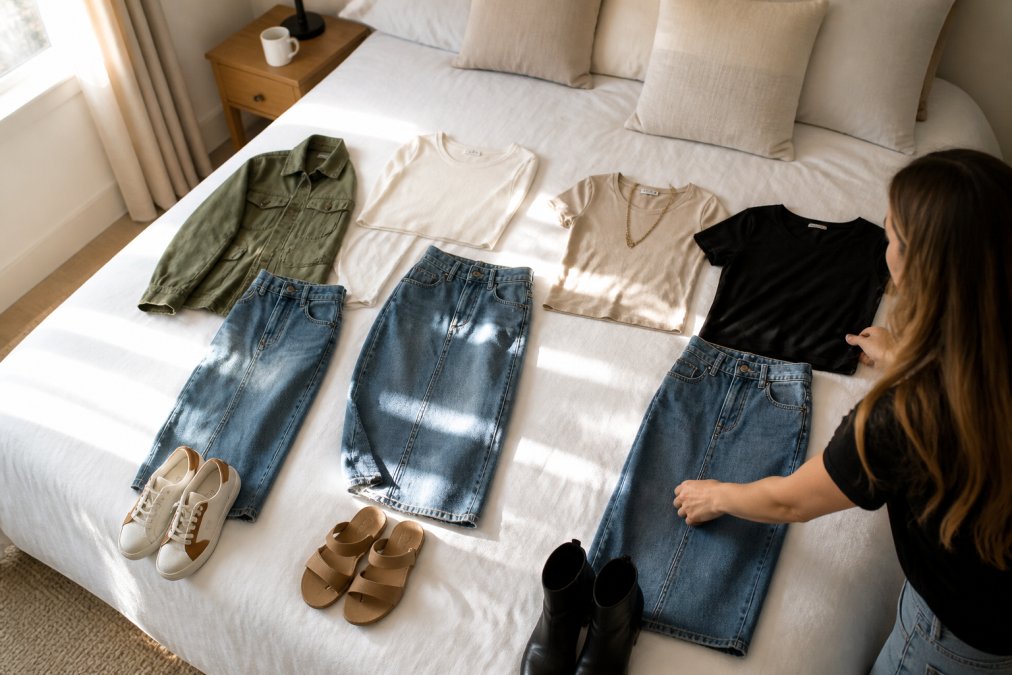
This challenge reveals whether your chosen pieces genuinely produce the outfit combinations you thought they would, and identifies gaps. If you reach for something outside your 3-3-3 set more than twice in a month, that category is underserved.
Run the challenge before you declutter your full wardrobe. Keep the rest in storage during the 30 days. At the end, assess honestly:
- Which combinations did you wear most?
- Which pieces went untouched?
- What were you missing?
- Did you feel restricted, or did you find the constraint freeing?
Most people find that decision fatigue drops significantly. The morning routine becomes faster. Getting dressed stops being a source of stress.
Seasonal Transitions, Garment Care, and Digital Inventory Management
Seasonal transition is where many capsule wardrobes break down. The solution isn't building four separate capsules. Build one core capsule of pieces that work year-round, then add a small seasonal layer of 5-7 pieces per season.
Your core pieces, neutral tees, denim, a structured jacket, a versatile dress, don't leave your closet. What changes is your outerwear, footwear, and one or two accent pieces. This keeps your capsule cohesive and prevents the seasonal shopping spiral that undermines the whole system.
According to Sustainable Apparel Coalition's Higg Index resources on garment longevity, how you care for garments is as significant a factor in their lifespan as the quality of the fabric itself.
Caring for Your Pieces to Maximize Capsule Longevity
Capsule longevity depends almost entirely on how you care for the pieces you've chosen. A few practices that genuinely extend garment life:
- Wash in cold water on a gentle cycle for most natural and blended fabrics
- Turn dark denim inside out before washing to preserve the wash
- Air dry structured pieces rather than using a dryer
- Store knitwear folded, not hung, to prevent stretching
- Use cedar blocks or lavender sachets for natural fiber protection
The cost-per-wear calculation changes dramatically when you care for your pieces properly. A $58 denim skirt worn 80 times over three years costs less per wear than a $20 fast fashion alternative worn 10 times before it falls apart.
Tracking Your Capsule Collection Digitally
Digital inventory management is one of the most practical ways to maintain your capsule over time. Several approaches work well depending on how detailed you want to get:
- Photo inventory: Take a photo of each piece against a neutral background and store them in a dedicated album on your phone. Use this to plan outfits when traveling or shopping.
- Spreadsheet tracking: A simple spreadsheet with columns for item name, color, category, cost, and date purchased gives you a clear view of your full capsule. Add a "times worn" column and update it monthly.
- Wardrobe apps: Several dedicated apps let you photograph your pieces, tag them by color and category, and plan outfits digitally.
The goal isn't to make capsule planning complicated. It's to give you a clear picture of what you own so you stop buying duplicates and identify real gaps.
A well-maintained digital inventory also makes seasonal transitions easier. You can see at a glance which core pieces need replacement, which seasonal items are ready to rotate back in, and where your capsule has drifted from your original palette.
For additional guidance on building a sustainable and intentional wardrobe, the Council of Fashion Designers of America's sustainability resources offer practical frameworks for making more conscious clothing choices over time.
Building a capsule wardrobe takes a single focused weekend to start, but the payoff compounds over years. The challenge most women face isn't knowing what to do, it's finding pieces that are genuinely versatile, well-made, and worth the investment. Kimberly's Dream offers a curated selection of chic, comfortable everyday pieces designed to mix, match, and hold up across seasons. From the Essential Tee to the A-Line Dress, our collection is chosen with capsule versatility in mind. Choose your starting pieces at Kimberly's Dream and build a wardrobe that actually works for your life.
Frequently Asked Questions
How many items should be in a functional capsule wardrobe?
Most capsule wardrobe guides recommend between 25 and 40 pieces total, including tops, bottoms, outerwear, shoes, and accessories. The exact number depends on your lifestyle. If you work from home, you may need fewer formal pieces and more versatile everyday basics. The goal is that every item works with at least three others, so even 30 well-chosen pieces can generate dozens of outfit combinations.
What is the 3-3-3 rule for a capsule wardrobe?
The 3-3-3 wardrobe challenge asks you to choose just 3 tops, 3 bottoms, and 3 accessories, then wear only those 9 items for 30 days. It's a practical experiment designed to reveal which pieces you actually reach for versus which ones just take up space. Many people find it clarifies their personal style faster than any style quiz or Pinterest board.
What are the most common mistakes when building a capsule wardrobe?
The biggest mistake is buying new pieces before completing a wardrobe audit. Most people already own several capsule-worthy basics buried under impulse buys. Other common errors include choosing too many similar neutral tones with no variation in texture, skipping outerwear entirely, and ignoring cost per wear when budgeting. A $58 denim skirt you wear 40 times costs far less per wear than a $20 top you wear twice.
What are the top fashion trends to incorporate into a 2026 capsule wardrobe?
For 2026, the strongest capsule trends lean toward elevated basics with clean silhouettes, utility-influenced layering pieces like structured jackets, and versatile A-line shapes that work across casual and polished settings. Earth tones and warm neutrals remain strong as base pieces. The focus is on capsule longevity over trend-chasing, so prioritize pieces that work across seasons rather than anything too seasonal or statement-heavy.
How do I transition my capsule wardrobe between seasons?
Seasonal transitions work best when your capsule is built around a neutral color palette that carries across temperatures. Swap out roughly 20-30% of your pieces each season rather than rebuilding from scratch. In practice, this means storing heavier outerwear and swapping in lighter layers. Pieces like a cotton tee, denim skirt, or A-line dress stay in rotation year-round when you adjust what you layer over or under them.
Can a capsule wardrobe work for professional or work-from-home environments?
Yes, and it's one of the most practical applications. A work-from-home capsule wardrobe focuses on pieces that look polished on a video call but feel comfortable for a full day at a desk. Think structured tees, tailored bottoms, and a utility jacket you can throw on before a meeting. The goal is reducing decision fatigue on weekday mornings while maintaining a professional aesthetic when it counts.
This article was written using GrandRanker
0 comments