

Table of Contents
- Why Your Work From Home Outfits Actually Matter
- Capsule Wardrobe for Remote Workers: The Foundation
- Business Casual Work From Home Outfits That Actually Fit Your Day
- How to Dress for Video Calls Without Overthinking It
- Comfortable Work From Home Outfits for Every Season
- Ergonomic Dressing: How Clothes Affect How You Feel and Work
- Styling Tips to Look Put-Together Without Trying Too Hard
- Conclusion
Last Updated: August 12, 2026
Why Your Work From Home Outfits Actually Matter
What you wear directly shapes how you think, how you present yourself on calls, and how your body feels after eight hours at a desk. Most people underestimate this connection until they spend a week in pajamas and wonder why their focus has collapsed.
At Kimberly's Dream, we've focused on clothes that feel good to wear all day but still look intentional when the camera turns on. The goal isn't to dress like you're heading into a corporate office, it's to dress like someone who takes their work seriously, even from the couch.
According to research published in the Journal of Experimental Social Psychology, the clothes we wear influence our cognitive performance, a concept researchers call "enclothed cognition." Choosing an outfit with some structure, even a soft blazer or a crewneck sweater, can shift your mental state from "weekend mode" into something more focused.
Comfort is not the opposite of looking professional, it's the foundation of it. If your waistband digs in by noon or your top restricts your shoulders, your posture shifts and your energy drops. Getting comfortable outfits for working from home right means solving for both dimensions at once.
Capsule Wardrobe for Remote Workers: The Foundation
A capsule wardrobe for remote workers is a small, curated set of pieces that mix and match across multiple outfit combinations without requiring a full closet overhaul. Most remote workers keep their "nice" clothes separate from their "home" clothes and default to whatever is softest and closest. A proper capsule collapses that divide.
Wardrobe Staples Worth Investing In
The core pieces for a remote work capsule wardrobe are:
- Wide-leg trousers with an elastic or pull-on waistband. The SPANX AirEssentials Wide Leg Pant offers buttery-soft fabric, a relaxed silhouette, and polish for video calls.
- Pull-on pants with a tailored fit. LOFT's pull-on styles offer soft, stretchy fabrics with the visual structure of proper trousers and are machine washable.
- A crewneck sweater in a neutral. The Quince Cashmere Crewneck is a classic silhouette in 100% cashmere that elevates leggings or joggers instantly.
- A knit blazer for layering. The Banana Republic Factory Knit Blazer provides the structure of a traditional blazer with the stretch of a cardigan, ideal for video calls.
- Leggings as a base layer, not the whole outfit. Aerie's Offline Real Me Leggings offer four-way stretch and a high-waisted fit, but work best when paired with a longer top.
Five to seven pieces from this list give you more than a week of outfit combinations without repetition.
Fabrics That Work All Day
Fabric choice is the most overlooked decision in building comfortable outfits for working from home. Breathable fabrics like organic cotton and lightweight jersey regulate temperature well in climate-controlled spaces. Stretch materials, including four-way stretch blends, allow full range of motion without pulling when you shift positions at your desk. Cashmere and soft knits add warmth without bulk.
Avoid stiff denim, heavy wool, or anything with a rigid waistband for all-day wear. These fabrics create pressure points that accumulate into real discomfort over a long session.
Business Casual Work From Home Outfits That Actually Fit Your Day
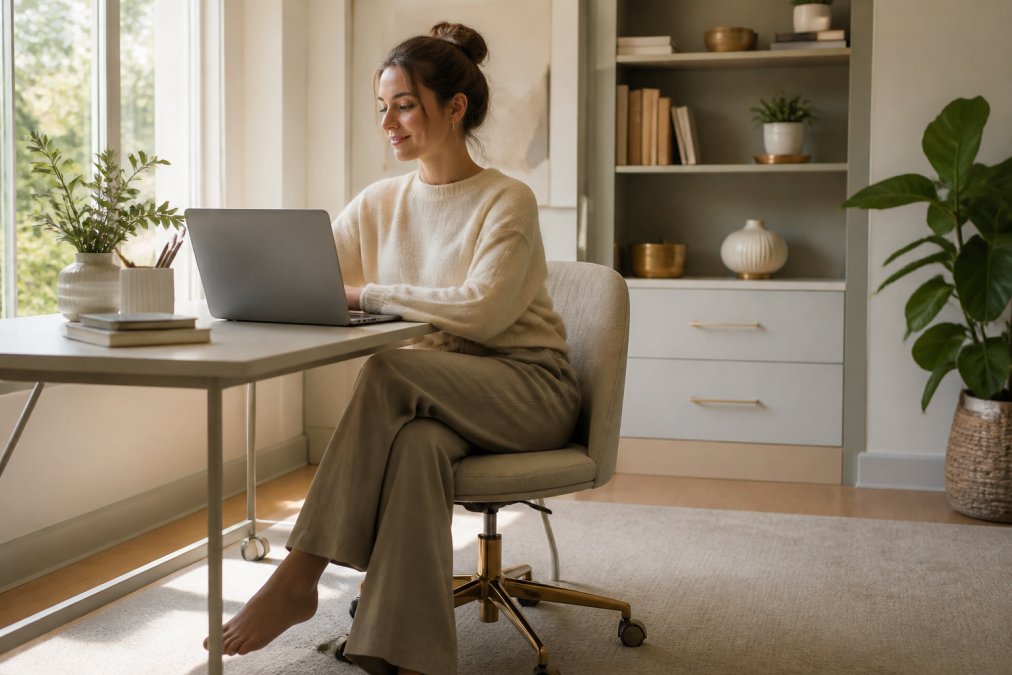
Business casual work from home outfits sit in a specific sweet spot: they look intentional on camera and feel like loungewear off it. A wide-leg trouser paired with a crewneck sweater exemplifies this principle. From the waist up on a video call, you look polished. From the waist down, you're sitting in something that feels closer to pajama pants than dress trousers.
5 Outfit Formulas to Rotate All Week
These five formulas cover the full range of remote work days, from deep-focus solo work to back-to-back video calls.
-
Monday reset: Organic cotton joggers + oversized crewneck sweater + clean white socks. Comfortable and minimal for heads-down work days with no calls.
-
Video call ready: Wide-leg pull-on trousers + fitted crewneck or mock-neck top + knit blazer. This formula looks most professional on camera.
-
Midweek stretch: High-waisted leggings + long oversized sweater that hits mid-thigh. The Amazon Essentials Batwing Oversized Sweater works well here.
-
Smart casual: Pixie chinos + tucked-in long-sleeve tee + cardigan. Looks put-together without requiring effort.
-
Friday elevated basics: Soft tailoring like Lululemon ABC Classic Fit Trousers paired with a simple fitted top. Wrinkle-resistant fabric means you can wear these from morning to afternoon calls without changing.
| Outfit Formula | Best For | Key Pieces | Video Call Ready? |
|---|---|---|---|
| Monday reset | Deep focus days | Joggers + crewneck | No |
| Video call ready | Back-to-back meetings | Wide-leg trousers + knit blazer | Yes |
| Midweek stretch | Casual solo work | Leggings + oversized top | With blazer added |
| Smart casual | Mixed days | Chinos + cardigan | Yes |
| Friday elevated basics | Flexible days | Soft tailored trousers + fitted top | Yes |
How to Dress for Video Calls Without Overthinking It
Dressing for video calls is simpler than most guides make it. The camera sees from roughly the collar up, which means your top half is doing all the work.
Wear something with a defined neckline. Crew necks, V-necks, and mock-necks all read clearly on camera. A structured knit blazer layered over a simple top is the most reliable formula because it adds visual shape without requiring a full outfit change.
Three practical steps for video call dressing:
- Check your background and lighting before worrying about the outfit. A well-lit face in a plain top looks more professional than a full blazer in a cluttered, dark room.
- Choose solid colors or simple patterns. Fine stripes and busy prints create visual noise on camera. Elevated basics in neutral tones photograph cleanly.
- Keep a blazer or structured cardigan on the back of your chair. When a call is scheduled, you put it on. When it ends, you take it off.

Comfortable Work From Home Outfits for Every Season
Seasonal styling for remote workers is a practical challenge most wardrobe guides ignore. Your home environment doesn't have a dress code, but it does have a thermostat.
Spring and fall are forgiving seasons for comfortable outfits. Lightweight knits, long-sleeve tees, and mid-weight joggers cover the range without much adjustment.
Summer calls for breathable fabrics. Lightweight linen blends, organic cotton, and moisture-wicking stretch materials keep you comfortable through warm afternoons. A sleeveless or short-sleeve top with a light cardigan nearby handles temperature swings.
Winter requires layering. A cashmere crewneck over a fitted long-sleeve base layer is the most comfortable and functional combination. Add a knit blazer for calls.
Layering for Climate-Controlled Spaces
Climate-controlled dressing means building outfits that adapt to indoor temperature swings without requiring a full wardrobe change. Most home offices run cool in the morning and warm by afternoon.
The most effective layering formula:
- Base layer: A fitted, breathable top in cotton or soft jersey blend
- Mid layer: A crewneck sweater or zip-up hoodie that can come off quickly
- Top layer: A knit blazer or structured cardigan, reserved for calls or when temperature drops
According to ergonomics and workplace comfort research from Cornell University's Human Factors and Ergonomics Lab, thermal discomfort is one of the most consistent factors in reduced concentration and productivity in home office environments. Dressing in adaptable layers is a practical fix that requires no equipment.
Ergonomic Dressing: How Clothes Affect How You Feel and Work
Clothing is rarely part of ergonomics conversations, but it should be. The biggest mistake with work-from-home dressing is wearing anything that creates consistent pressure on the body. A tight waistband compresses the abdomen and affects posture. Stiff collars create neck tension. Poorly fitting bra straps or underwire cause shoulder and upper back strain that accumulates across a workday.
Ergonomic dressing means choosing clothes that don't fight your body's natural position at a desk:
- Elastic waistbands over fixed waistbands for seated work
- Relaxed fit through the shoulders and arms to allow full range of motion
- Soft tailoring rather than structured, interfaced garments
- Natural and stretch materials that move with the body
According to occupational health guidance from the American Physical Therapy Association, sustained static postures combined with restrictive clothing contribute to musculoskeletal discomfort for desk workers. Sometimes the fix is swapping a rigid waistband for a pull-on alternative.
Styling Tips to Look Put-Together Without Trying Too Hard
Looking put-together in comfortable outfits for working from home comes down to a few consistent habits.
Start with fit, not formality. A well-fitting pair of joggers looks more intentional than an oversized blazer that doesn't sit right. Clothes that fit your actual body always read better on camera than aspirational sizing.
Use color intentionally. A minimalist aesthetic built around two or three neutral tones makes getting dressed faster. Navy, camel, white, and grey work together in almost any combination.
Elevated basics are the core of a functional remote wardrobe. A plain crewneck sweater in quality fabric reads as polished. The distinction is in textile quality and design simplicity.
Accessories do more work than most people realize. A simple pair of earrings or a clean watch elevates a basic outfit enough to feel intentional for a call.
The collections at Kimberly's Dream are built around this principle: chic, elegant designs that function as everyday wear without requiring a separate "work wardrobe" and a "home wardrobe." Pieces that move between a morning desk session and an afternoon errand are the ones worth owning.
A practical checklist for building your remote work style:
- Own at least two pairs of pull-on or elastic waistband trousers in neutral colors
- Have one knit blazer or structured cardigan for video calls
- Build your base layers in breathable fabrics: cotton, jersey, or lightweight cashmere
- Keep one pair of leggings for low-key days, paired with a longer top
- Choose at least three pieces that work as both "home" and "out" outfits
- Prioritize textile quality over quantity, especially for pieces you wear daily
For deeper context on how clothing choices connect to daily wellbeing, the American Psychological Association's research on behavioral and environmental factors in productivity offers useful perspective on why small environmental decisions, including what you wear, compound over time.
Building a wardrobe that handles every part of a remote workday is one of those challenges that sounds simple until you're staring at a closet full of clothes that don't quite work together. Kimberly's Dream offers a curated selection of women's loungewear and everyday apparel designed to solve exactly that: chic, versatile pieces that look intentional on camera and feel comfortable through a full workday. Choose pieces from the collection that cover your core outfit formulas, and you'll spend far less time thinking about what to wear and far more time actually working.
Frequently Asked Questions
What are the best fabrics for all-day comfort while working from home?
Breathable fabrics like organic cotton, soft knit blends, and stretch materials with four-way flexibility hold up best through long workdays. Look for options labeled wrinkle-resistant or moisture-wicking if you run warm. Cashmere and modal feel luxurious without restricting movement. The goal is textile quality that stays comfortable from your first meeting to your last task, without needing to change outfits mid-afternoon.
How do you balance comfort and professionalism on video calls?
The camera only sees your top half, so focus your effort there. A structured blazer, polished crewneck sweater, or elevated knit top instantly reads as professional on screen. Pair it with whatever comfortable bottoms you prefer below the frame. Good lighting and a tidy background carry as much weight as your outfit. Choosing pieces in solid, neutral tones or subtle patterns keeps the visual clean and camera-friendly.
What are essential pieces for a versatile work-from-home wardrobe?
A solid capsule wardrobe for remote workers typically includes pull-on pants or wide-leg trousers with an elastic waistband, two or three crewneck sweaters in neutral tones, a knit blazer for video calls, breathable layering pieces, and comfortable outfits for working from home that transition from desk to errands. Prioritize pieces that mix and match easily so you can build multiple outfits from fewer items without buying coordinated sets.
How should you dress for a remote job to stay productive?
Getting dressed, even in elevated loungewear, signals to your brain that the workday has started. Avoid staying in sleep clothes all day; instead, choose comfortable work-from-home outfits that feel intentional. Soft tailoring, structured tops, and pull-on pants with a clean silhouette strike the right balance. The outfit doesn't need to be formal, but it should feel different enough from pajamas to help you shift into a focused, productive mindset.
This article was written using GrandRanker
0 comments