

Table of Contents
- Why an Easy Return Policy Matters for Clothing Retailers
- How to Write a Return Policy for Your Online Store
- Customer-Friendly Return Policy Examples and Best Practices
- Making Your Return Policy Visible and Accessible
Last Updated: August 20, 2026
Why an Easy Return Policy Matters for Clothing Retailers 🛍️
When customers shop for clothing online, uncertainty follows them through checkout. Will the fit be right? Will the fabric hold up?
An easy return policy directly addresses that friction. According to Route's 2026 consumer research, 97% of shoppers say a positive return experience makes them more likely to buy from a retailer again. Yet more than 2 in 5 consumers have avoided purchasing from fashion retailers because the returns process seemed too restrictive, costly, or unclear, costing the retail fashion industry an estimated $43.4 billion in sales over the past year.
Customers aren't just buying clothes, they're buying permission to try. An easy return policy removes the risk from their decision, which increases both initial purchases and customer loyalty. According to ShipNetwork's 2026 e-commerce benchmarks, apparel-specific return rates climb to 24-30%, making a solid return policy non-negotiable for clothing stores.
How to Write a Return Policy for Your Online Store ✍️
Writing a return policy is about clarity. Customers need to understand three things immediately: how long they have to return, what condition the item must be in, and how they get their refund.
Start with your return window. Most clothing retailers use 30 to 60 days, though some extend to 90 days. Research from Shorr Packaging's 2025-2026 consumer report found that 44% of returns are due to fit or sizing issues, followed by damaged products at 31%. A longer window gives customers time to try items in real-world conditions.
Next, define item condition clearly. "All items must be unworn, unwashed, and in original packaging" is clear. "Items must be in good condition" invites disputes.
Then address return shipping. According to Shorr research, 86% of consumers consider free return shipping non-negotiable. Offering a prepaid shipping label removes friction entirely. If you can't offer free returns, state the shipping cost upfront and provide a QR code or label customers can print immediately.
Finally, specify your refund timeline. State how long after the return is received the refund will process. Customers want certainty.
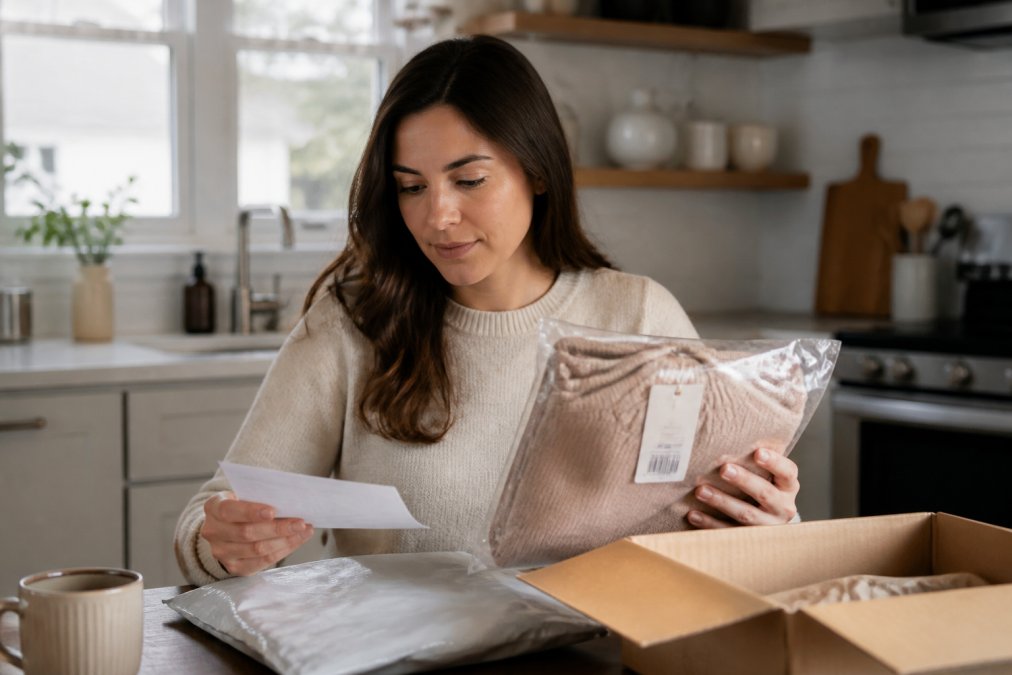
Customer-Friendly Return Policy Examples and Best Practices 💚
The best return policies balance customer convenience with operational reality.
Free returns with prepaid labels. This removes every barrier to the return process. The upfront cost is offset by higher conversion rates and repeat purchases.
Extended windows for seasonal items. Consider a 90-day return window for holiday or seasonal apparel. Customers buying gifts or pieces for specific occasions need flexibility.
Multiple return options. Let customers choose: mail it back, drop it at a retail partner, or arrange a pickup. According to CX Dive's 2026 consumer insights, free return shipping, instant refunds, and multiple return options build consumer confidence.
Clear condition requirements with photos. Show examples instead of vague language. "Items with tags attached and unworn" paired with a photo removes ambiguity and reduces disputes.
Store credit as an alternative. Offering a small incentive for store credit (5-10% bonus) gives customers a choice while reducing your refund volume.

A customer-friendly return policy generates detailed product reviews. When customers feel safe returning items, they're more likely to leave honest feedback about fit and quality, driving future sales.
Making Your Return Policy Visible and Accessible 👀
A great return policy hidden in your footer doesn't help anyone. Display it prominently on your homepage, product pages (near the "Add to Cart" button), and checkout page. Retailers displaying return terms prominently on product pages saw a 14.6% higher checkout completion rate.
Use plain language. "You have 60 days to return items for a full refund" beats legal jargon.
Create a dedicated returns page with step-by-step instructions:
- How to initiate a return
- How to print your shipping label
- Where to drop off your package
- Expected refund timeline
- FAQs addressing common questions
Mobile matters. Over 50% of online shopping happens on mobile devices. Your return policy must be readable on a phone without zooming. Use short paragraphs, bullet points, and clear headings.
Consider adding a return policy callout on product pages. A simple banner saying "60-day easy returns" reassures hesitant customers at the moment they're deciding whether to buy.
An easy return policy is one of the most underrated levers in retail. It costs upfront in handling and logistics but pays back through higher conversion rates, stronger customer loyalty, and fewer abandoned carts. Customers are willing to spend more and shop more frequently when they trust the return process.
At Kimberly's Dream, we understand that when you're shopping for elevated loungewear or seasonal apparel online, confidence matters. A transparent, customer-friendly return policy removes the "what if it doesn't fit?" worry that stops so many purchases. By implementing clear timelines, free returns, multiple options, and prominent visibility, you create the conditions for customers to buy confidently and return easily, and to choose to shop from you again and again.
Frequently Asked Questions
What should I look for in a clothing store's easy return policy?
Look for a clear return window (30 to 60 days is standard for apparel), free return shipping, and straightforward refund processing. A customer-friendly return policy should specify item condition requirements, offer multiple return methods, and prominently display terms on product pages. Studies show retailers displaying return terms clearly see 14.6% higher checkout completion rates. Avoid policies with hidden restocking fees or vague language that creates confusion.
What is the average return window for clothing retailers?
The average return window for clothing ranges from 30 to 60 days, though this varies by retailer. Many stores have shortened windows from 60 days to 30 days in recent years, with some as brief as 14 days. Longer return windows reduce return rates through the endowment effect, where customers value items more once they own them. A lenient timeframe signals confidence in your products and builds customer trust.
How can I reduce return fraud while keeping my policy easy and customer-friendly?
Require items to be in original condition with original packaging and tags attached. Request proof of purchase for high-value items. Monitor for 'bracketing' behavior (buying multiple sizes to try on), which accounts for 63% of apparel returns. Set clear final-sale categories for clearance or deeply discounted items. Implement return authorization numbers to track patterns. Balance these safeguards with transparency, clearly communicate what qualifies for a return upfront to avoid customer frustration and maintain loyalty.
Why do customers prioritize easy returns when choosing where to shop?
Customers view easy returns as risk removal. Apparel return rates hit 24-30%, driven mainly by fit uncertainty and sizing issues. When shoppers know returns are simple and free, they're more confident ordering online. Research shows 97% of consumers say a positive return experience makes them more likely to buy again, and 71% say a bad return experience stops them from returning. Easy returns directly influence customer acquisition and retention, making this a competitive advantage for clothing retailers.
This article was written using GrandRanker
0 comments